
Why human insight is more important than ever in the age of AI
Notes from my keynote in Stockholm

This post is a summary of my keynote talk at the Data Innovation Summit in Stockholm on 6 May. Welcome aboard if this is your first time here. You can find me on LinkedIn, and do please subscribe to this newsletter, too:
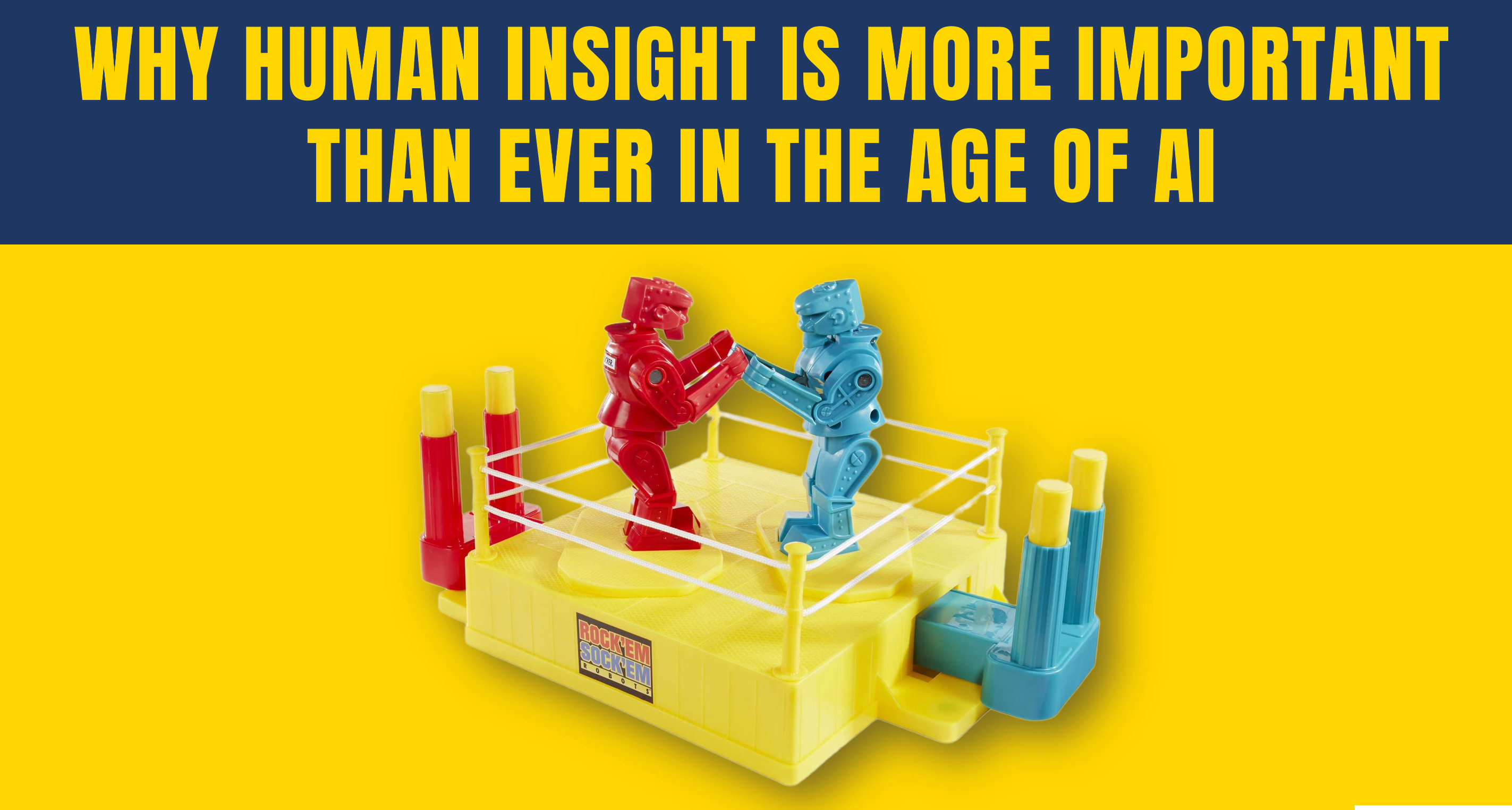
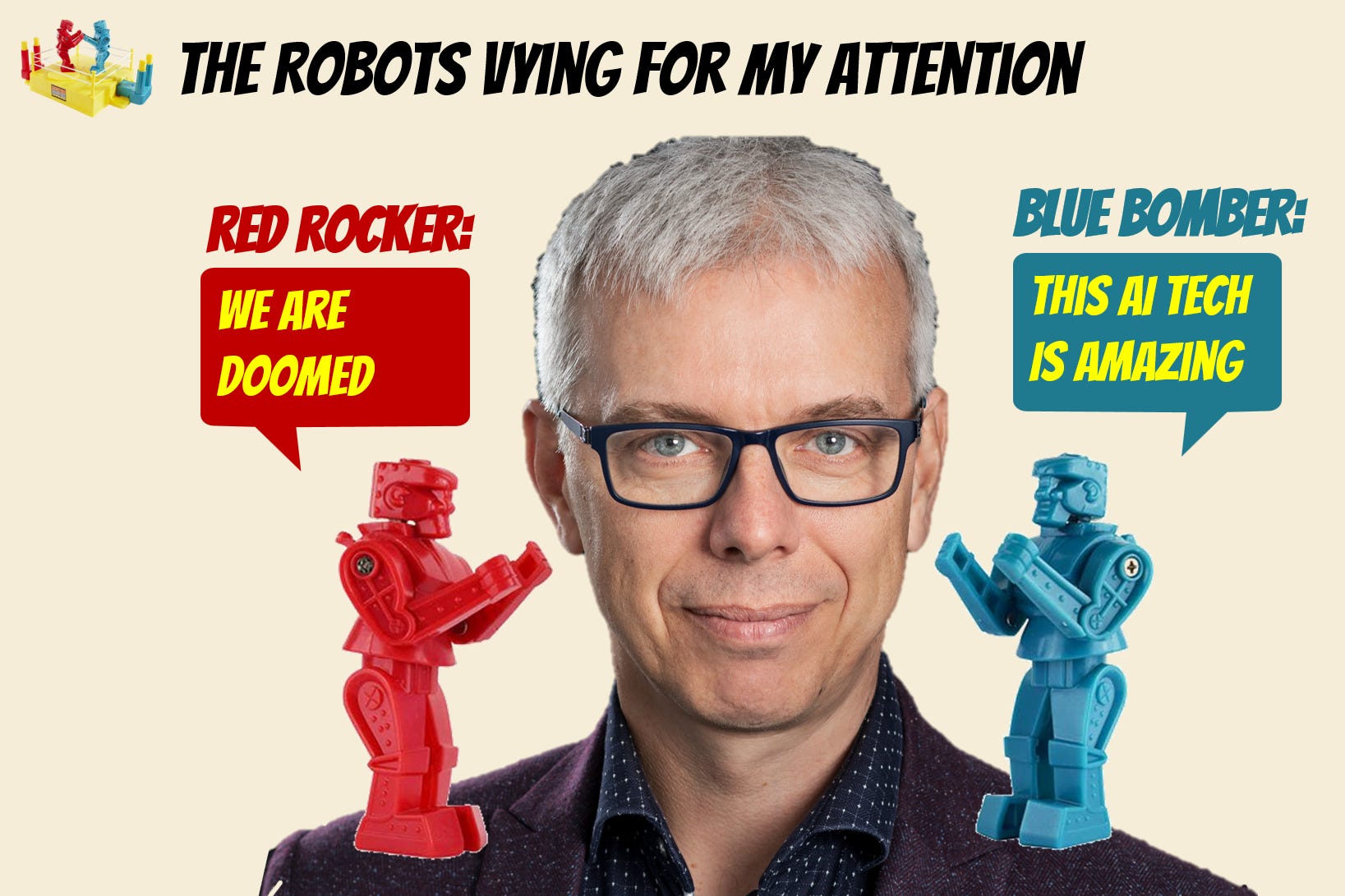
This period of AI disruption feels like the Rock’Em Sock’Em robots bashing around in my head. On one hand, the blue robot is fighting for me to realise that AI is an amazing tech that is going to disrupt in a good way. On the other hand, I have the red robot fighting to convince me that the existential risks are too huge to ignore.
This internal tug-of-war shows up in my daily work as a data professional: should I lean into experimenting with the latest AI tools and features, or slow down to scrutinize their impact and safeguard against mistakes?
These constant decisions keep the debate between excitement and caution alive in nearly every project I take on.
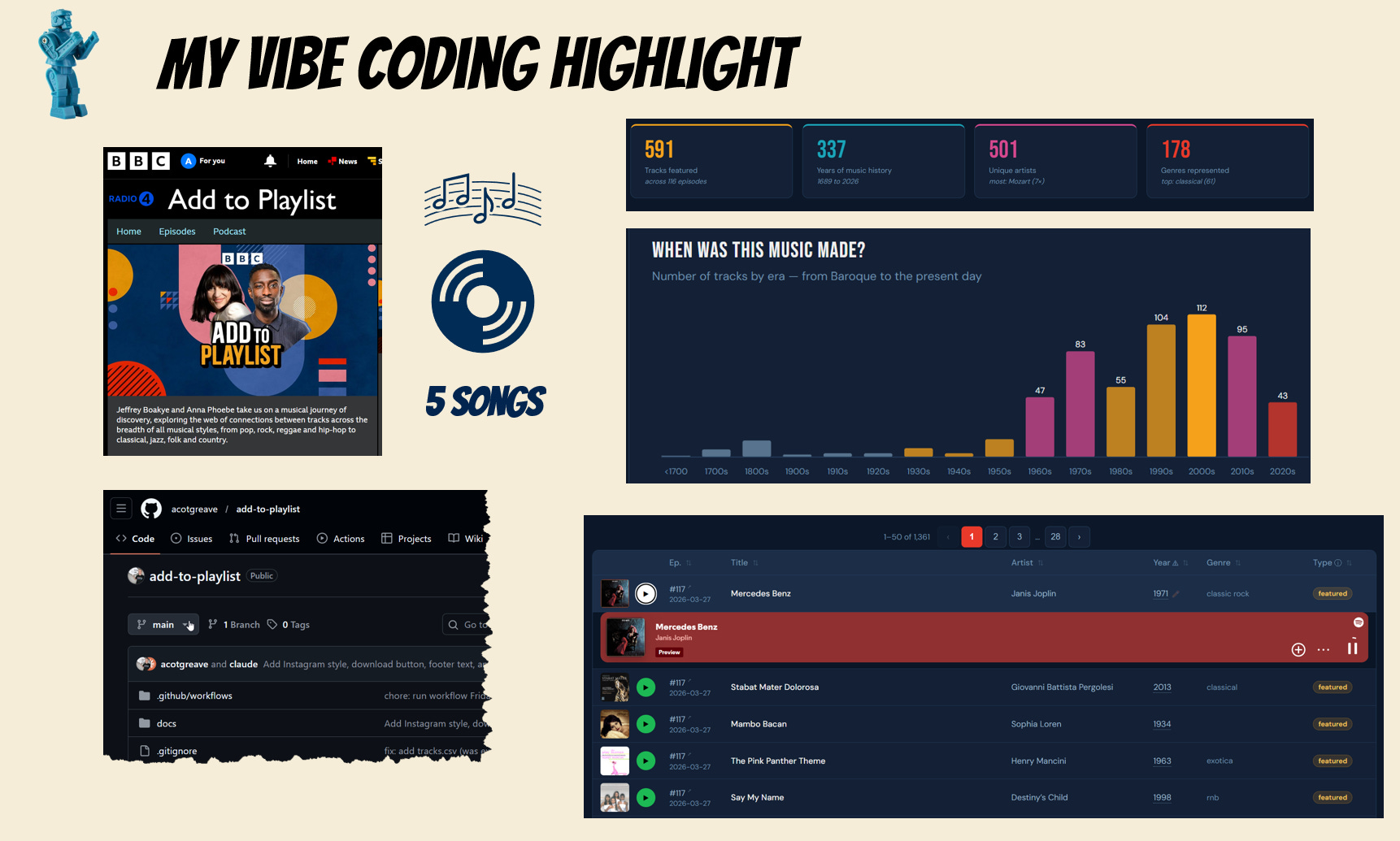
Excitement abounds. We’re all vibe-coding and doing things we never really dreamed possible. The example I shared is my homage to my favourite radio show, Add To Playlist (http://addtoplaylist.howtospeakdata.com/).
With Claude Code, I wrote an app that scrapes all tracks ever featured and summarises them with charts and a searchable catalogue.
And yet there is a never-ending story of things going wrong. The one I featured is about the Clawbot agent whose job was to find and fix errors on GitHub. What did it do when a human being rejected one of its changes?
It researched, wrote and published a hit piece about Scott Shambaugh, the human moderator of matplotlib. That post is readable by all, and will now itself be subsumed into the knowledge of LLMs.
More reading about the Clawbot agent:
This was featured in the tech press (e.g., The Register) and on podcasts (e.g., Hard Fork)
If that’s the quandary, the good and the bad, how can we stay human?
I shared ideas in three critical areas:
Data Storytelling and Analysis
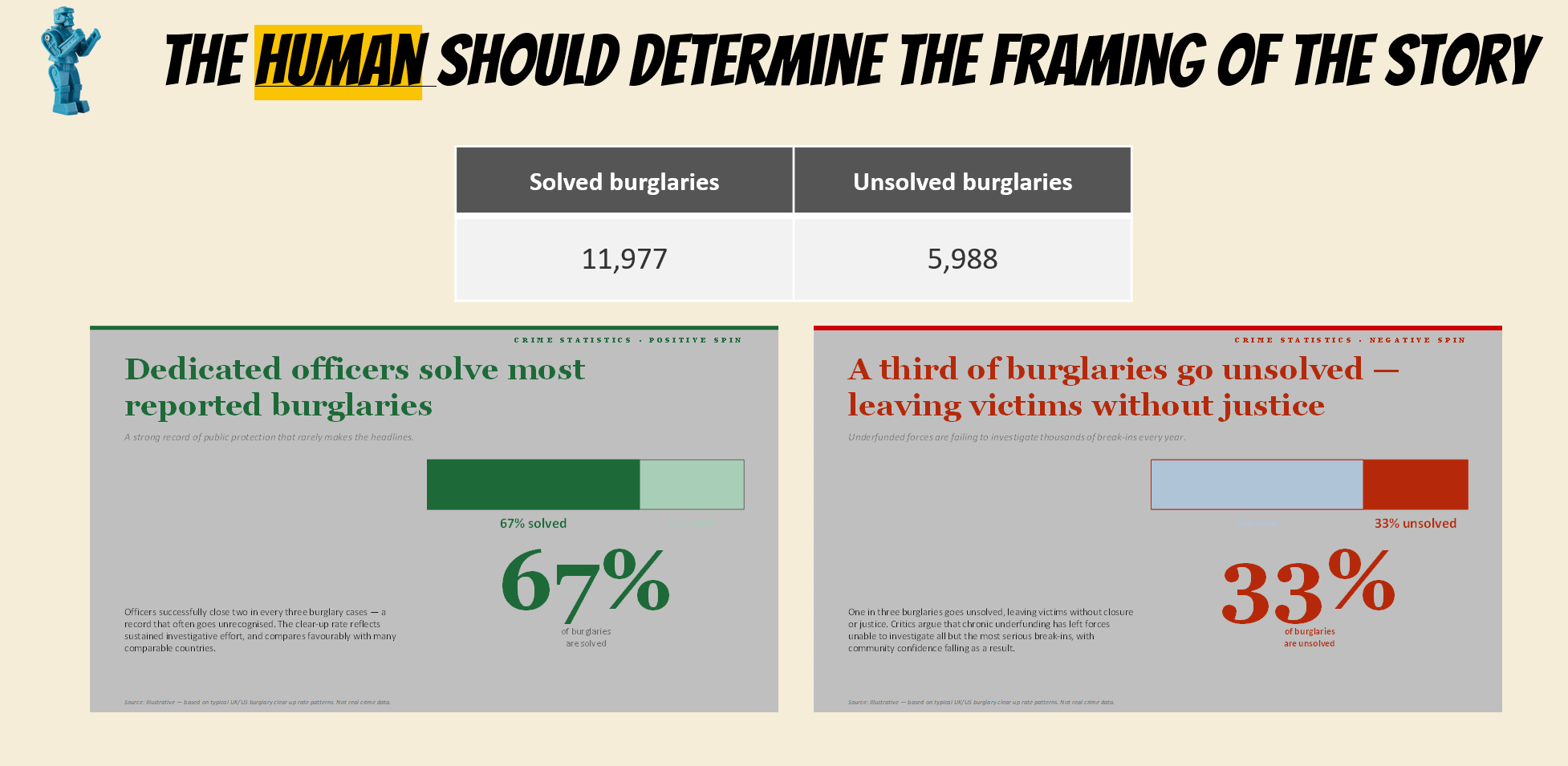
I talked about the risk of letting AI Assistants frame your story on your behalf. You must stay in control of the framing.
Here are links to the things I talked about:
Claude has great add-ins for PowerPoint and Excel.
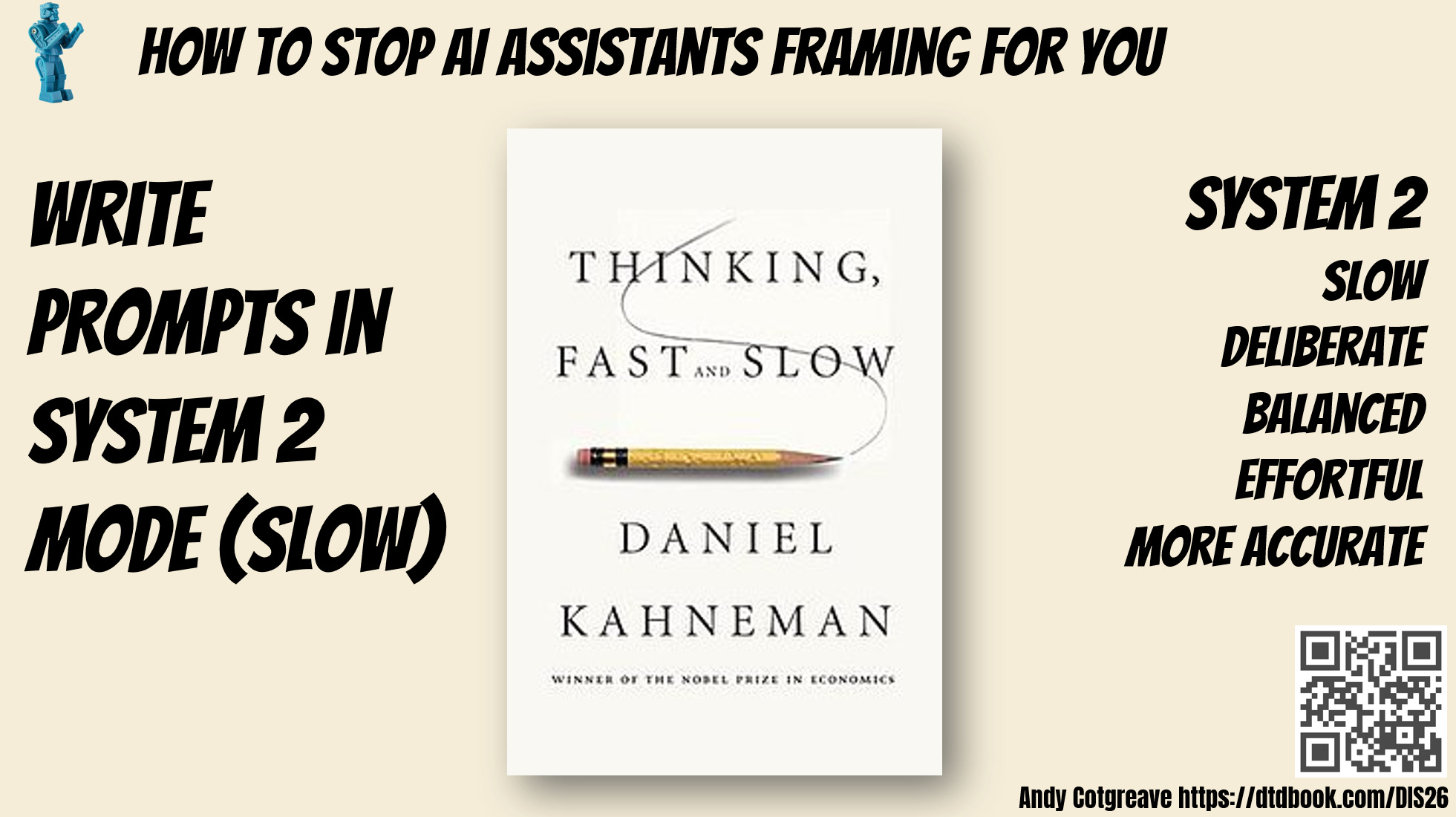
Thinking Fast and Slow by Daniel Kahneman describes System 1 and System 2 thinking. I recommend prompting in system 2 mode: it’s a way to provide as much context as possible to your AI Assistants right at the start.
Semantics and Context
Semantics is more important than ever. I referred to my episode of The AI Analysts with Charles Schaefer from Hex when we talked about Hex’s Context Studio. It’s a part of the platform that monitors users’ questions and flags ones that Hex cannot answer based on semantic definitions. Those flagged conversations are sent to the data team so they can extend the semantic layer.
“Like it or not, data people are being turned into ‘context curators.’ That’s your role now,” was Charles’ excellent quote from our episode of The AI Analyst (see all episodes here).
Governance: local and global
At an organisational level, I shared two great resources:
“That meeting you hate may keep AI from stealing your job” is an excellent article by Noam Scheiber at the New York Times.
Leader, Lab, Crowd is an organisational framework described by Ethan Mollick.
And at the global level, I shared these resources:
Do read The Empire of AI by Karen Hao. It changed my worldview.
The Economist did a great piece asking if we should trust just 5 men with AI.
My final call is for us all to consider how we regulate and educate ourselves to mitigate the risks of the dark side of AI. It’s not easy.
Summary
I’d love to know your thoughts.
Do you have the two voices on your shoulders, telling you that AI is simultaneously exciting and terrifying? How do you manage it? How do you see us staying human in this age of AI?
That’s all for this one. Do follow me on LinkedIn and subscribe to this newsletter if you haven’t already done so. I’ll be continuing my adventure trying to make sense of AI in our data industry.